
Considerations when Preparing Light-Protected Compounds
news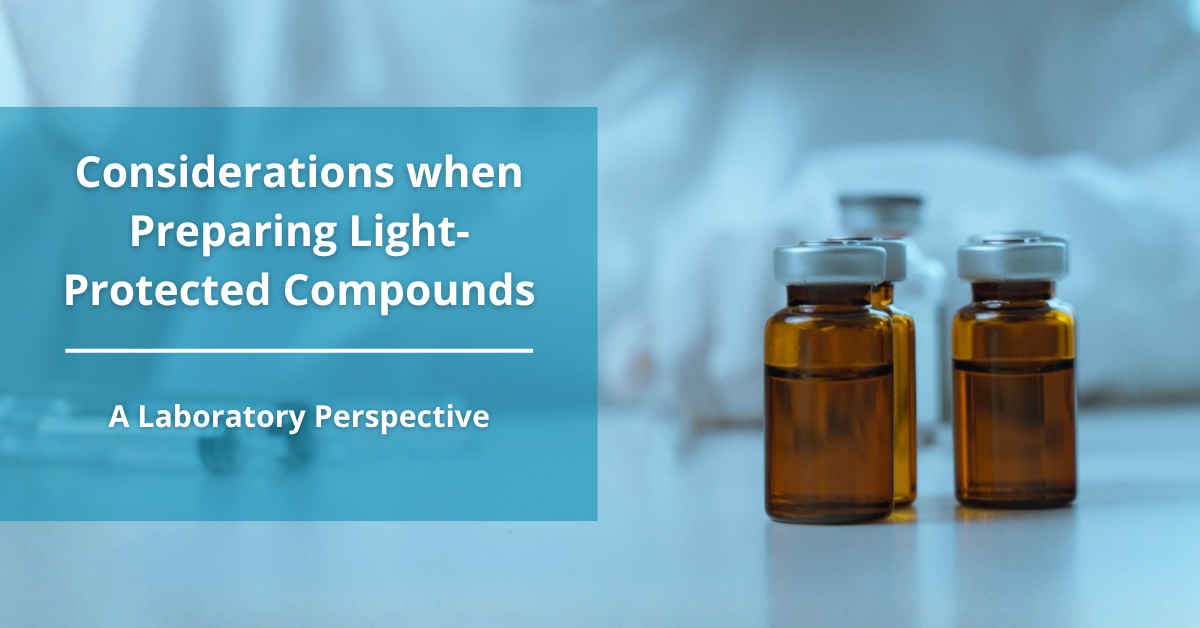
Nick Johnson, GMP Analytical Associate Supervisor
Why Light Protection Matters in Pharmaceutical Testing
Many active pharmaceutical ingredients (APIs) are light-sensitive and can degrade when exposed to sunlight, computer screens, laboratory lighting, or other radiation sources. Depending on the API’s chemical structure and the light source’s wavelength and intensity, exposure can provide enough energy to initiate photochemical reactions.
Common degradation pathways associated with light exposure include:
- Oxidation
- Reduction
- Isomerization
- Bond cleavage
- Molecular rearrangement
These reactions can ultimately reduce the potency of an API and create additional challenges during analytical testing. If degradation occurs before or during potency testing, the resulting analytical value may not accurately represent the original sample. Maintaining sample integrity throughout the compounding and testing process is therefore essential to producing reliable results and supporting appropriate product quality.
Determining an API’s degree of light sensitivity before compounding and submitting samples to a laboratory for analytical testing allows compounders and laboratory analysts to establish appropriate handling and protection measures. The level of protection required should be based on the known or demonstrated sensitivity of the compound and the conditions under which the sample will be handled.
Light Sensitivity and Protection Throughout the Testing Process
Light-induced degradation is not limited to a single point in the analytical process. Exposure can occur during compounding, packaging, storage, sample preparation, or analysis, making it possible for degradation to occur long before the sample reaches the analytical instrument.
For this reason, light-sensitive APIs should be appropriately protected throughout all stages of their lifecycle, including:
- Compounding and packaging
- Sample storage
- Sample preparation
- Post-preparation storage
- Instrument analysis, including HPLC and LC-MS
One challenge of photodegradation is that it may not be immediately apparent. A sample can appear visually unchanged while undergoing chemical degradation. It is important to control light exposure from the start of the compounding process rather than addressing it after degradation has occurred, as the original exposure may be difficult to identify after potency testing.
Protecting Samples from Light
Several approaches can minimize light exposure during pharmaceutical sample handling. The appropriate approach depends on the API’s sensitivity and the analytical procedure’s requirements.
Control Ambient Lighting
Reducing ambient light is one of the simplest ways to minimize light exposure. Closing blinds, reducing room lighting, and turning off unnecessary lights can significantly decrease the amount of light reaching a sample.
For APIs with relatively low light sensitivity, controlled ambient lighting may provide sufficient protection during routine sample preparation. This approach may not be adequate for highly photosensitive compounds. Before relying solely on reduced room lighting, evaluate the API’s sensitivity.
Amber Glassware and Foil Protection
Amber volumetric flasks, vials, and other light-protective glassware can reduce the amount of light reaching a sample during preparation and storage. However, not all amber glassware provides the same degree of protection.
The level of protection can vary depending on factors such as glass thickness, glass composition, and degree of coloration. These differences matter most when working with highly photosensitive APIs, where small differences in light transmission can affect sample stability.
When handling light-sensitive materials, use amber glassware instead of clear glassware. Additionally, wrapping volumetric glassware in aluminum foil or another light-blocking material offers extra protection. The foil acts as a strong physical barrier against light, significantly reducing exposure during sample preparation.
For compounds especially sensitive to light, combining amber glassware with foil protection adds an extra layer of safety and effectively minimizes light exposure.
Dark Room Environments
For highly photosensitive APIs, additional environmental controls may be necessary. A designated room with minimal or no exposure to natural light can provide substantially greater protection than a conventional laboratory environment.
Low-intensity lighting with wavelengths are less likely to promote degradation. Depending on the API’s sensitivity and photochemical properties, red or yellow lighting may reduce exposure to potentially damaging wavelengths while still providing sufficient visibility.
Combining controlled lighting with amber glassware and foil protection can further reduce photodegradation during sample preparation.
Light Protection Does Not End with Sample Preparation
Protecting an API during sample preparation is only one part of maintaining sample integrity. Once a sample has been prepared, it may continue to be exposed to light while awaiting laboratory analysis.
Prepared samples are commonly transferred into HPLC or LCMS vials for analysis. Although amber vials protect against light, the same considerations about differences in light transmission still apply. Therefore, ARL’s analysts consider the degree of protection an amber vial provides when working with highly photosensitive compounds.
Additional protection comes from wrapping prepared sample vials in foil and minimizing light exposure while samples wait for analysis. Where practical, protecting samples in the instrument autosampler from unnecessary light exposure also adds another layer of control.
These precautions are especially important when a time gap exists between sample preparation and injection. The longer a prepared sample remains exposed to potentially damaging light, the greater the risk of degradation.
Ensuring Reliable Quality Testing
ARL Bio Pharma considers light sensitivity when performing potency testing. By understanding a compound’s photostability characteristics, the analysts determine appropriate sample handling, preparation, storage, and analytical conditions.
The United States Pharmacopeia (USP) is an important resource when evaluating the handling requirements of light-sensitive materials. Individual USP monographs and general chapters may provide specific storage, packaging, or handling requirements that should be followed when applicable.
Ultimately, the goal of light protection is to preserve the sample’s integrity from compounding and storage through preparation and final analysis. Appropriate precautions help minimize the risk of photodegradation and ensure that analytical results accurately represent the sample being tested. Effective light protection is an important component of maintaining sample integrity, obtaining reliable analytical results, and supporting consistent quality. For questions about light-sensitive compounds or potency testing, contact ARL Bio Pharma at 800-393-1595 or info@arlok.com.
Request a Quote