
For potency testing with respect to HPLC, IC and/or GC methodologies, ARL verifies by way of system suitability that we are capable of performing the analysis with accuracy. The verification focuses on:
- Multiple injections of the reference standard for calculation of %CV
- Verification of retention time of the standard and the sample
- Review of blank (diluent) chromatogram with analyte of interest and
- Overall review of the chromatogram for peak shape
ARL applies good chromatographic practices, good documentation practices and utilizes a USP grade reference standard.
ARL also offers validation services. If you would like to validate a formulation specific potency method for your product(s) please contact us info@arlok.com.
Personnel Qualification and Environmental Monitoring Requirements for Compounded Sterile Preparations (CSPs) Categories 1 and 2.
Category 1:
- May be prepared in a PEC located in an unclassified segregated compounding area
- Assigned a BUD of ≤12 hours at controlled room temperature or ≤24 hours when refrigerated
Category 2:
- Must be prepared in a cleanroom suite
- May be assigned a BUD of >12 hours at controlled room temperature or >24 hours if refrigerated
| Test | Current | Official November 1, 2023 |
|---|---|---|
| Visual Observation of hand hygiene and garbing | Annually | Once every 6 months |
| Gloved Fingertip and thumb sampling | Annually | Once every 6 months |
| Media Fill Testing | Annually | Once every 6 months |
| Post Media-fill surface sampling | Not required | Surface sample of direct compounding area after each media-fill competency |
| Surface sampling | Periodically | Monthly |
| Viable air sampling | Once every 6 months | Once every 6 months |
Visual Observation of hand hygiene and garbing: This is a competency evaluation of hand hygiene, garbing procedures, and gloved fingertip and thumb sampling of both hands.
Gloved fingertip and thumb sampling:
- This test provides data on any microorganisms present on the technician’s gloves during compounding.
- Press gloved fingertips onto one agar plate per hand after compounding. Label plate with all relevant information including, but not limited to, staff members name, date, and time of sampling.
- Send plates to ARL for incubating, counting of colony forming units (CFUs), and reporting of a Certificate of Analysis (COA).
- Document test results.
- Determine if any additional actions are required including growth promotion of the media to prove the media was capable of detecting growth, identification of any organisms recovered, retraining of staff, etc.
- Repeat as necessary
Media Fill Testing:
- This test assesses the technician’s ability to compound aseptically.
- Personnel should perform the media fill test under the most stressful and challenging conditions at the pharmacy. A simulated compounding operation is conducted with microbial growth media in place of drug components and/or products.
- Send media fill containers to ARL for incubation and observation, and reporting of a Certificate of Analysis (COA).
- Document test results.
- Determine if any additional actions are required including growth promotion of the media to prove the media was capable of detecting growth, identification of any organisms recovered, retraining of staff, etc.
- Repeat as necessary
Post media-fill surface sampling test:
- This test assesses the technician’s ability to compound aseptically.
- At the completion of the media fill qualification procedure, the surfaces of the compounding area are sampled using agar press plates.
- Send plates to ARL for incubating, counting of colony forming units (CFUs), and reporting of a Certificate of Analysis (COA).
- Document test results.
- Determine if any additional actions are required including growth promotion of the media to prove the media was capable of detecting growth, identification of any organisms recovered, retraining of staff, etc.
- Repeat as necessary
Surface sampling:
- This test monitors surfaces for viable particles.
- At the conclusion of a compounding session, agar press plates are used to sample the surfaces of the compounding space.
- Send plates to ARL for incubating, counting of colony forming units (CFUs), and reporting of a Certificate of Analysis (COA).
- Document test results.
- Determine if any additional actions are required including growth promotion of the media to prove the media was capable of detecting growth, identification of any organisms recovered, retraining of staff, etc.
- Repeat as necessary.
Viable air sampling:
- This test monitors air quality for viable airborne particles.
- Follow manufacturer’s instructions for operation of the active air sampling device, including placement of media. Test at least 1 cubic meter or 1000 L of air from each location sampled.
- Send plates to ARL for incubating, counting of colony forming units (CFUs), and reporting of a Certificate of Analysis (COA).
- Document test results.
- Determine if any additional actions are required including growth promotion of the media to prove the media was capable of detecting growth, identification of any organisms recovered, retraining of staff, etc.
- Repeat as necessary
Madeline Kennedy, Microbiologist III
The sampling quantities defined in USP <71> Sterility Tests are determined based upon statistical probabilities of identifying contamination, should it be present, given various article and batch sizes. The specific direction to follow is found in tables 2 and 3 in the chapter. Table 2 defines the minimum volume per test article to be inoculated into each sterility media type. Since there are two types of media used during a USP <71> sterility test, tryptic soy broth (TSB) and fluid thioglycolate medium (FTG or FTM), the quantity noted in the table represents half of the per-article test volume needed to complete a USP <71> compliant sterility test. Table 3 defines the minimum number of articles of a final product to be tested based on the batch size of the lot being assessed. Complying with the sampling guidelines in USP <71> provides the recommended level of stringency for sterility testing of compounded pharmaceutical products and is the minimum acceptable quantity to test to ensure confidence in a “Sterile” result.
Below are two examples of determining the appropriate sterility test volumes according to USP <71> tables 2 and 3:
- A batch of 400 vials, filled with 50mL each – According to Table 2, this article size requires 20mL from each vial to be inoculated into each sterility media type (total of 40mL per article); and for this batch size, 10 containers would need to be tested. As such, the USP <71> compliant test volume for this batch would be 400mL.
- A batch of 600 syringes, filled with 1mL each – According to Table 2, this article size requires the whole contents of each container be inoculated into each sterility media type (which will double the required number of containers required to be tested according to Table 3); and for this batch size, 24 containers (double the 12 noted in Table 3 due to the fill volume) would need to be tested. As such, the USP <71> compliant test volume for this batch would be 24mL.
Additionally, ensuring appropriate volume requirements are met during sterility method suitability testing is equally important. Test volume is an important component of the method suitability demonstration, as any inhibitory or antimicrobial properties present in the product may variably impact the ability to recover the method suitability test microorganisms depending on volume tested. As an example, minimal inhibitory effects may be seen when performing a sterility test on ten 10mL vials (100mL total) of a product. However, if the vial size of the same product is increased to 30mL, the sterility test volume would increase from 100mL to 300mL, and inhibitory properties may then be present. In that, or any, case where container or batch size is changed, it is important to ensure appropriate sterility method suitability testing is re-performed if necessary. This is due to the increase in active ingredients, inactive ingredients, and preservatives, any of which could potentially impact microorganism growth. Should an ineffective method be used to perform a sterility test on a larger volume, the risk for a false negative test result increases. For potential cost and time savings, ARL Bio Pharma recommends performance of sterility method suitability testing on the largest potential container / batch size combination for a given product. This will ensure the test volume validated covers all subsequent sterility test submissions.
Reference:
For more information, please contact ARL at info@arlok.com or 800-393-1595.
James Zellner, Technical Sales
Mycoplasmas are a fascinating group of extremely small bacteria with unique characteristics and growth habits. There are over 120 species of Mycoplasmas found in and on a variety of animal and plant hosts. They possess no cell walls, are fastidious in their growth requirements, and are the smallest type of self-replicating prokaryotic organism. Their lack of a cell wall makes them resistant to antibiotics like Penicillin, which target cell wall synthesis in other bacterial organisms. Mycoplasmas are parasitic and commensal bacteria that commonly colonize cell lines and tissue cultures in the lab environment, and the epithelial lining of the respiratory and urogenital tracts in humans. Their parasitic nature is a result of their inability to produce a number of factors required for growth, hence their association with living cells and tissues.
The characterization and detection of Mycoplasmas can be difficult, since they do not Gram stain (no cell walls), and when they are viewed microscopically, present with varying cell size and morphology. They can’t be detected using standard sterility test methodology like USP <71>, so specialized techniques are required to screen for Mycoplasmas. Detection of Mycoplasma contamination is critical for cell and tissue line production, biologic therapeutics derived from host and cell lines, and in the production of cell line medias and supplements. Infections of Mycoplasmas in cells and tissues may go undetected for an extended period of time, while simultaneously altering every aspect of the growth and metabolism of the cell line. Visible damage, alteration of cell appearance, or turbidity may not be present in cell products contaminated with Mycoplasma. A 2008 Corning study on cell culture contamination indicated that Mycoplasma contamination was a widespread problem, appearing in a disturbingly high number of cultures in the lab environment. The study also highlighted the very high density of growth possible, and difficulty associated with attempting to filter Mycoplasma out, all due to the extremely small size of these organisms1.
There are a variety of techniques available to screen for Mycoplasma contamination. USP <63> Mycoplasma Tests, serves as the compendial reference chapter. USP states “Testing for Mycoplasma is a necessary quality control requirement to assure reliably pure biotechnological products and allied materials used to generate these products.” The two compendial methods referenced in the chapter are an agar and broth procedure, and an indicator cell line procedure. In the agar and broth technique, a variety of specialized medias and environmental conditions are used to culture Mycoplasma, if present. The alternate method, an indicator cell line procedure, uses an actual cell culture which is exposed to the product being tested to encourage Mycoplasma growth and indicate contamination. Downsides to each of these is the time required to run the tests. The agar and broth method takes several weeks, and the cell line method takes over a week. In addition to these compendial procedures, USP describes the use of validated nucleic acid amplification techniques, such as PCR, to screen test samples. PCR methods are highly beneficial since the turnaround time can be 3 days or less. ARL Bio Pharma offers a validated, formulation specific PCR method with quick turnaround times. In all cases, careful aseptic technique, appropriate laboratory conditions, and a highly trained staff able to properly interpret the results are required.
With the increasing demand for biologic products and patient specific treatment protocols, Mycoplasma testing should be considered as critical as any other quality test during production and on finished products. Mycoplasma’s ability to remain undetected, reach high population density, and evade attempts at removal, make screening paramount. Mycoplasma contamination poses a significant risk to patient safety and potential loss of products made from biologic sources.
- 1John Ryan (2008). “Understanding and Managing Cell Culture Contamination”, Technical Bulletin, Corning Incorporated. p. 24.
- US Pharmacopeial Convention (USP). USP 43/NF 38 <63> Mycoplasma Tests. 2022.
- US Pharmacopeial Convention (USP). USP 43/NF 38 <71> Sterility Tests. 2022.
For more information, please contact ARL at info@arlok.com or 800-393-1595.
In 2022, Compounding Today ran a series of articles on pharmaceutical compounding errors. These articles by Loyd V. Allen, Jr., PhD, RPh, Editor-in-Chief, International Journal of Pharmaceutical Compounding, are captured in an 11-part series. See the links below to access content.
- Pharmaceutical Compounding Errors (Classification, Description, and Prevention of Errors)
- Pharmaceutical Compounding Errors Part 2 (General Errors)
- Pharmaceutical Compounding Errors Part 3 (Incorrect Ingredients)
- Pharmaceutical Compounding Errors Part 4 (Incorrect Concentration)
- Pharmaceutical Compounding Errors Part 5 (Incorrect Use of Equipment)
- Pharmaceutical Compounding Errors Part 6 (Physicochemical Issues)
- Pharmaceutical Compounding Errors Part 7 (Microbiological Contamination)
- Pharmaceutical Compounding Errors Part 8 (Analytical Testing Issues)
- Pharmaceutical Compounding Errors Part 9 (Microbiological Testing Issues)
- Pharmaceutical Compounding Errors Part 10 (Miscellaneous Errors)
- Pharmaceutical Compounding Errors Part 11 (Medication Error)
Click here to subscribe to Compounding Today newsletter. This excellent resource is available and free to the pharmacy community.
ARL Bio Pharma offers in-house analytical testing employing atomic absorption spectrophotometry (AAS). We offer services for AAS method development & validation for compounded pharmaceutical products, and compendial monograph testing per USP requirements. This in-house test method provides a faster turnaround time compared to outsourced tests.
Atomic absorption spectrophotometry (AAS) can be used to measure the concentration of over 70 elements in solution. The sample is atomized in a flame fuel (acetylene) and gases, or in a graphite furnace. Measurement sensitivities are typically in the low parts-per-million (ppm) range for flame atomization, and low parts-per-billion (ppb) range for graphite furnace atomization. A specific light source emits a discrete wavelength for each specific element, and free atoms of the sample absorb this radiation. The magnitude of this absorption is proportional to the concentration of free atoms in the sample for the specific element.
The United States Pharmacopeia (USP) requires AAS to be employed in compendial testing for a variety of pharmaceutical products, including but not limited to:
- Magnesium Chloride: Aluminum & limit of Calcium
- Sodium Acetate: Aluminum
- Sodium Hydroxide: Potassium & Content of Sodium
- Alprostadil: Limit of Chromium & Rhodium
- Inositol: Limit of Lead
- Levocarnitine: Limit of Sodium & Potassium
- Bismuth Subsalicylate: Limit of Copper, Lead, Silver & Soluble Bismuth
In industries outside of pharmaceuticals, AAS is used for quality control measures such as the determination of trace residues (sodium, iron, calcium, etc.) in production materials. Forensic chemists may employ AAS for clinical applications involving heavy metal toxicity (arsenic, lead, thallium, etc.) within blood or body tissues.
For more information, please contact ARL at info@arlok.com or 800-393-1595.
Water Activity and its Importance to Drug Product Quality
What is water activity?
In compounded preparations, water activity refers to the water in a drug product freely available to participate in reactions such as hydrolysis or provide an environment that supports microbiological growth. Measuring water activity is important because many drug products include water in their formulations and are sensitive to water exchanges with the environment.
How much water activity is required to support microbial growth?
USP <1112> Table 1 lists water activity values required to support the growth of microorganism species. If water activity falls below that value, microbial growth is suppressed.
| Bacteria | Water Activity (aw) | Molds and Yeast | Water Activity (aw) |
|---|---|---|---|
| Pseudomonas aeruginosa | 0.97 | Rhyzopus nigricans | 0.93 |
| Bacillus cereus | 0.95 | Mucor plumbeus | 0.92 |
| Clostridium botulinum, Type A | 0.95 | Rhodotorula mucilaginosa | 0.92 |
| Escherichia coli | 0.95 | Saccharomyces cerevisiae | 0.90 |
| Clostridium perfringens | 0.95 | Paecilomyces variotii | 0.84 |
| Lactobacillus viridescens | 0.95 | Penicillium chrysogenum | 0.83 |
| Salmonella spp. | 0.95 | Aspergillus fumigatus | 0.82 |
| Enterobacter aerogenes | 0.94 | Penicillium glabrum | 0.81 |
| Bacillus subtilis | 0.90 | Aspergillus flavus | 0.78 |
| Micrococcus lysodekticus | 0.93 | Aspergillus niger | 0.77 |
| Staphylococcus aureus | 0.86 | Zygosaccharomyces rouxii (osmophilic yeast) | 0.62 |
| Halobacterium halobium (halophilic bacterium) | 0.75 | Xeromyces bisporus (xerophilic fungi) | 0.61 |
What is the connection between water activity values and the beyond use dates in USP <795>?
In USP <795>, USP details the role of water activity in determining BUD limits for preparations. The chapter defines aqueous and nonaqueous dosage forms based on water activity:
- Aqueous – water activity measurement ≥ 0.6
- Nonaqueous – water activity measurement < 0.6
Why do drug products with water activity below 0.6 have a longer BUD limit?
Dosage forms with water activity < 0.6:
- Prevent microbial proliferation
- Improve the antimicrobial effectiveness of preservatives
- Reduce the likelihood or amount of active pharmaceutical ingredient degradation due to hydrolysis
- Decrease the frequency of microbial limit testing and screening for objectionable organisms for product release and stability testing
How is the water activity value determined?
- There are representative examples of different dosage forms and their water activity values in USP <1112> Table 2 and USP <795> Table 3.
- Testing the drug product can also determine water activity values. Water activity is measured by calculating the vapor pressure of water in the test sample relative to the vapor pressure of pure water at the same temperature. ARL’s water activity instrument uses a chilled dew point sensor to measure water activity with ± 0.003 accuracy.
For more information on water activity, contact ARL at info@arlok.com or 800-393-1595.
Quality assurance programs are essential to establishing standards for compounded preparations. One of the most important elements in a QA program is identifying the root cause of a failure and implementing a corrective action to prevent a future failure, also known as CAPA (Corrective and Preventative Action).
USP <795> states that compounders shall adhere to general principals of compounding which includes adequate procedures and records exist for investigating and correcting failures or problems in compounding, testing, or the preparation itself.
Potential sources of product stability failures and quality problems include:
- The drug and its degradation mechanism
- The dosage form and its components
- The potential for microbial proliferation
- The container in which the preparation is packaged
- The expected storage conditions
- The intended duration of therapy
Corrective actions that 503A, 503B, and hospitals can take to prevent failures include:
- Check the raw material certificate of analysis (CoA) and consider the purity, salt form, and water content into the formulation sheet calculation.
- Check whether the raw material is sensitive to light, heat, or absorbing moisture easily.
- If a filtration step is involved in compounding process, confirm no significant filter binding before large batch production.
- Confirm content uniformity (sample to sample variability) before large batch production for suspension and cream.
- Confirm the package used (vials, syringe, etc.) is particle free for injectable formulation. Stability studies fail due to particle detected in vials.
- Confirm integrity of intended container before large batch production. Regulatory bodies put container closure integrity testing as a requirement for stability. Even if pharmacies and outsourcing facilities are not notified of an adverse event due to container closure, this does not necessarily indicate the package will pass a CCIT test.
- Confirm the pH and if there is a pH requirement for the product. The pH can change significantly based on batch to batch of the ingredients. Example: many ingredients are HCI salt forms but can vary in HCI content if the formulation doesn’t have sufficient buffer strength.
- Beside active pharmaceutical ingredient (API), other components such as preservatives are critical to stability of the API or antimicrobial properties.
- Compatibility (physical such as solubility or chemical such as color change) is critical for multiple API formulations such as multiple vitamin and amino mixtures. Some APIs can make other APIs more or less soluble/stable.
- Nonspecific binding can cause unexpected potency loss even for repackaging practice.
For more information on root cause of stability failures, watch this recent Quality Compounding Summit session from Dr. Thomas C. Kupiec:
Stability measures the extent to which a product retains, within specified limits, and throughout its period of storage and use, the same properties and characteristics it possessed at the time of compounding. According to USP <1191>, pharmacists should establish and maintain compounding conditions that ensure drug stability to help prevent therapeutic failure and adverse responses.
There are five stability considerations:
| Type of stability | Conditions Maintained Throughout the Shelf Life of the Drug Product |
|---|---|
| Chemical | Each active ingredient retains its chemical integrity and labeled potency, within the specified limits |
| Physical | The original physical properties, including appearance, palatability, uniformity, dissolution, and suspendability, are retained |
| Microbiological | Sterility or resistance to microbial growth is retained according to the specified requirements. Antimicrobial agents that are present retain effectiveness within the specified limits |
| Therapeutic | The therapeutic effect remains unchanged |
| Toxicological | No significant increase in toxicity occurs |
According to USP <795>, at all steps in the compounding, dispensing, and storage process, the compounder shall observe the compounded drug preparation for signs of instability. Each ingredient in a formulation can affect the stability of drug products and dosage forms. Environmental factors that reduce stability include adverse temperatures, light, humidity, oxygen, and carbon dioxide. Dosage form factors that reduce stability and cause active drug content loss include particle size (especially in emulsions and suspensions), pH, solvent system composition, compatibility of anions and cations, solution ionic strength, primary container, specific chemical additives, and molecular binding and diffusion of drugs and excipients.
All stability characteristics should be considered when assigning a beyond use date (BUD) for a preparation. A BUD is the date after which a compounded preparation shall not be used and is determined from the date the preparation is compounded. USP <797> allows for the use of the literature for BUD assignment but speaks to the risks of doing so. The most accurate way to assign a BUD is to perform testing over time to demonstrate the product maintains chemical, physical, and microbiological properties. A stability study commonly includes: a stability indicating method assay, sterility (for sterile preparations), endotoxin (for most sterile preparations), pH, visual inspection, particulate matter, preservative effectiveness and preservative quantification (for preserved preparations), microbial limits (for non-sterile preparations), and the absence of specified organisms (for non-sterile preparations).
In the absence of stability or sterility information, USP <795> and <797> provide guidance for maximum BUD recommendations. A stability study is required to extend the dating of a product that exceeds the maximum USP BUD recommendations. It is important pharmacists ensure their drug products meet acceptable stability criteria and avoid ingredients or conditions that could cause physical deterioration or chemical decomposition.
For more information on stability testing, contact ARL at 800-393-1595 or info@arlok.com
Resources:
- USP <795> Pharmaceutical Compounding—Nonsterile Preparations
- USP <797> Pharmaceutical Compounding—Sterile Preparations
- USP <1191> Stability Considerations in Dispensing Practice
Why are National Drug Codes Important in Compounding?
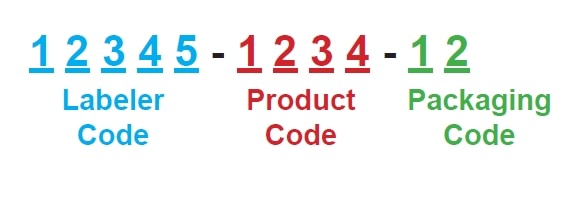
According to the Food and Drug Administration (FDA), drugs are identified and reported using a unique, three-segment number called the National Drug Code (NDC) which serves as the FDA’s identifier for drugs. FDA publishes the listed NDC numbers in the NDC Directory which is updated daily.
The NDC is configured into three segments:
- First Segment – Labeler Code identifies the company responsible for distributing the product in the United States. This portion of the code is assigned by the FDA.
- Second Segment – Product Code identifies the dosage, strength, and formulation of the drug. For example, a 400 mg acetaminophen tablet from the same manufacturer would be identified by the same product code in all its packaging. If a variation of this product was manufactured with a different component (e.g., 400 mg acetaminophen liquid capsule), it would receive a separate product code. This portion of the code is assigned by the manufacturer.
- Third Segment – Package code identifies the product container offered for sale. For example, a 10 bottle of tablets would have a different code than a 100 bottle of tablets. This portion of the code is assigned by the manufacturer.
A different NDC number indicates either a change in:
- Manufacturer
- Dosage, Strength, and Formulation of Drug
- Packaging
A drug product may have the same drug name and concentration on the label; however different NDCs may have different formulations.
When making compounded preparations from commercial products, it is important to compare the formulations of the commercial products with different NDCs to determine if the sterility method suitability and beyond use date established with one NDC can be applied to another. Sterility method suitability and beyond use date assignment are formulation specific. Changing commercial products may render your sterility method suitability and BUD assignment invalid.