
Amber Gilbert, ARL Bio Pharma Technical Sales Representative
API Vendor Qualification is a critical component of quality assurance for compounding pharmacies and outsourcing facilities. A structured, risk‑based qualification program helps ensure vendor reliability, regulatory compliance, and most importantly, patient safety across the supply chain.
Why API Vendor Qualification Matters in Pharmaceutical Compounding
In pharmaceutical compounding, product quality starts with the supply chain. The identity, purity, and consistency of active pharmaceutical ingredients (APIs), excipients, and packaging components directly affect the safety and performance of the final preparation. A strong vendor qualification program helps control supply chain risk, support regulatory compliance, and protect patient safety.
Vendor qualification is a formal, documented process used to evaluate, approve, and monitor suppliers and manufacturers of critical materials against defined quality and regulatory expectations. Not all materials and not all vendors carry the same level of risk. As a result, vendors should be selected and managed through established quality system controls using a risk-based approach.
Key considerations in API vendor qualification often include:
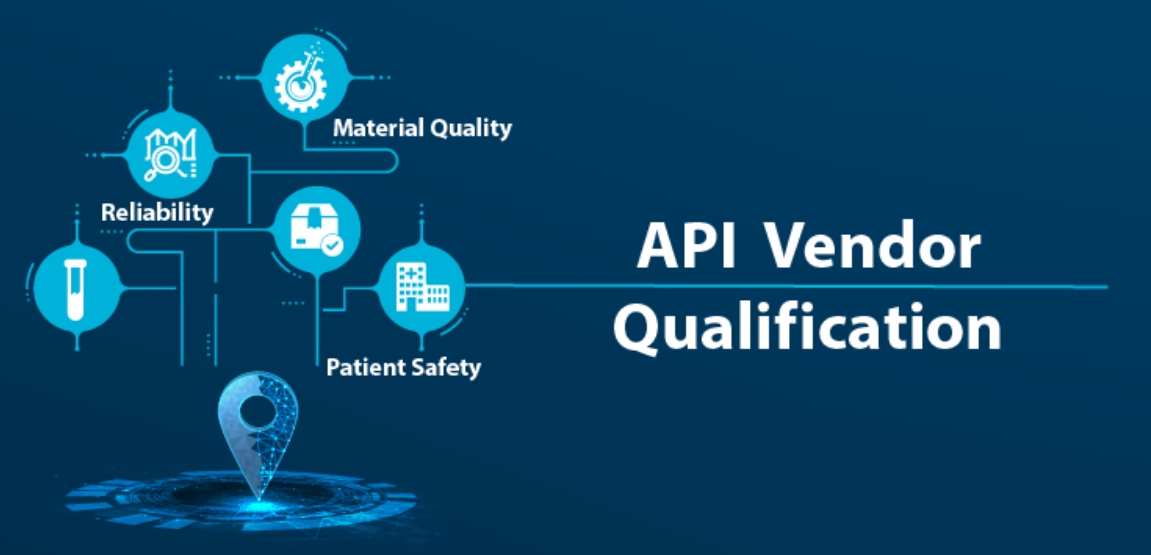
- Material Quality and Conformance: Identity, purity, and lot-to-lot consistency
- Patient Safety Risk: Control of impurities, contaminants, and suitability for intended use
- Supply Reliability: Production/Distribution capacity, lead times, and historical quality performance
Vendors that cannot consistently meet these expectations may increase the likelihood of deviations, impact formulation stability, or supply chain disruptions.
Meeting Regulatory Expectations
A robust vendor qualification program also supports compliance with expectations of regulatory authorities and quality standards organizations, including the U.S. Food and Drug Administration (FDA), the United States Pharmacopeia (USP), the International Council for Harmonisation of Technical Requirements for Pharmaceuticals for Human Use (ICH), and the International Organization for Standardization (ISO).
Under 21 CFR 211, supplier qualification is addressed through validation and quality system activities and supported by documented criteria such as supplier assessments or checklists. USP 1083 outlines core principles for identifying, approving, and monitoring suppliers of materials, packaging components, and services. ICH Q10 further integrates supplier management into the pharmaceutical Quality Management System (QMS) framework based on ISO 9001 concepts.
For API suppliers, it’s important to distinguish between the manufacturer and the distributor and understand expectations for each. Under ICH Q7 and FDA Q7, both must be qualified. Regulators also expect any entity performing GMP-critical activities in the API supply chain to be qualified and audited, including distributors that act as contract manufacturers/packagers or that store, handle, or transport API.
While regulations do not prescribe a single method for qualifying vendors, regulatory authorities expect pharmaceutical manufacturers, distributors, and compounding pharmacies to demonstrate due diligence in evaluating and maintaining their supply chains. Inadequate oversight can lead to FDA Form 483 observations, warning letters, product recalls, regulatory delays, and loss of consumer trust.
Essential Qualification Activities
An effective vendor qualification program typically includes several key activities:
- Vendor Selection: The process begins with identifying potential suppliers and assessing their capabilities, certifications, and regulatory compliance history.
- Vendor Audit & Risk Assessment: Each vendor should be evaluated based on material criticality and supplier risk to determine the appropriate level of qualification and oversight. Evaluation may include quality system assessments, documentation review, regulatory history, on‑site or remote audits, and laboratory testing of representative samples.
- Documentation & Compliance: Qualified vendors should provide key documents such as quality agreements, Certificates of Analysis (CoAs), stability data, and safety data sheets (SDS). When a CoA is issued by or for a repacker/reprocessor, agent, or broker, it should identify the testing laboratory (name, address, and phone number) and reference the original manufacturer and original batch CoA; a copy of the original batch CoA should be attached. Approval or disqualification decisions must be documented, and records retained per quality system requirements.
- Ongoing Monitoring and Requalification: For qualified vendors, written quality agreements establish expectations for documentation review, change control, communication, and performance. Ongoing monitoring may include periodic audits, questionnaires, interviews, and routine analytical testing of incoming materials against predefined acceptance criteria.
Vendor qualification is not a one‑time event, but a continuous quality and compliance control designed to ensure upstream suppliers consistently meet established requirements. By maintaining effective supplier oversight, compounding pharmacies can better manage risk while meeting regulatory expectations and continue to deliver safe, high-quality preparations to patients.
How ARL Can Help
ARL Bio Pharma supports vendor qualification programs through comprehensive testing, documentation review, and quality‑focused expertise. To learn more about how ARL can support your supplier qualification and material testing needs, contact info@arlok.com or call (800) 393‑1595.
Resources
- 21 CFR 211 – Current Good Manufacturing Practice for Finished Pharmaceuticals
- United States Pharmacopeia 1083 Supplier Qualification
- FDA Q7 Good Manufacturing Practice Guidance for Active Pharmaceutical Ingredients, Guidance for Industry
- ICH Harmonised Tripartite Guideline Good Manufacturing Practice Guide for Active Pharmaceutical Ingredients Q7
- ICH Harmonised Tripartite Guideline Pharmaceutical Quality System Q10
- ISO 9001:2015 Quality Management Systems – Requirements
Tiffany Corbin, ARL Bio Pharma Associate Lab Supervisor, Microbiology
Compounding pharmacies and outsourcing facilities must ensure that sterile preparations are compounded in controlled environments to minimize the risk of microbial contamination. Environmental monitoring (EM) is a process required by the United States Pharmacopeia (USP) and the Food and Drug Administration (FDA) to verify that aseptic processing areas consistently maintain a state of control during compounding. Pharmacies and facilities are required to document their EM procedures, including the selection of sampling sites, the frequency of sampling, acceptance criteria for monitoring particulates and microorganisms, and the investigative and corrective actions taken when necessary.
Sampling Sites
When selecting sampling sites, it is important to consider both routine operations and worst-case scenarios. The selection of these sites should be based on a documented risk assessment that accounts for airflow patterns, room classifications, personnel activities, equipment placement, and proximity to sterile preparation areas.
Common sampling locations typically include:
- Critical sites within ISO environments
- Equipment surfaces and high-touch areas
- Cleanroom floors, walls, and pass-throughs
- Personnel gloves and gowns following aseptic manipulations
Sampling should occur under dynamic conditions, with operations actively ongoing, to yield relevant data regarding routine processing conditions. Relying solely on static conditions for sampling does not adequately demonstrate environmental control.
Worst-case scenario conditions may include periods of maximum personnel occupancy, high batch throughput, upper/lower limits of temperature or humidity, and differential pressure excursions (within acceptable action limits).
Sampling Frequency
The FDA and USP specify sampling intervals based on the ISO classification of the area and the category of compounded sterile preparations. More frequent monitoring is required during initial qualifications, after any significant changes, or when adverse trends or excursions are detected. Additionally, it is important to consider when samples are collected, particularly during peak activity periods and at the conclusion of operations.
Sample Collection
Various methods are used to collect EM samples, each serving a specific purpose in assessing environmental conditions. Using a combination of these sampling methods allows for a comprehensive evaluation of the environment:
- Active air sampling draws a measured volume of air over a growth medium to quantify viable airborne microorganisms and is a requirement in classified areas.
- Passive air sampling (using settle plates) serves as a supplementary method in ISO environments.
- Surface sampling involves contact plates (e.g., RODAC plates) or sterile swabs to evaluate microbial contamination on surfaces and is essential for routine monitoring.
All sampling media must promote microbial growth and have successfully passed growth-promotion testing prior to use, in accordance with USP requirements.
Incubation and Observation
After collecting EM samples, they must be incubated under controlled conditions to allow for microbial growth. USP and FDA recommend a two-stage incubation approach using temperature ranges of 20-25°C and 30-35°C to ensure recovery of both environmental and human-associated microorganisms, including slow-growing microorganisms.
Once the incubation is complete, the samples are examined for microbial growth. Pharmacies and facilities should compare the results against established acceptance criteria, including alert and action levels specific to the ISO environment. It is essential to establish alert and action levels based on regulatory guidance, historical data, and risk assessment. These alert and action levels serve as indicators to identify potential issues or prompt further investigations, rather than simply categorizing results as pass or fail.
Interpreting Results and Investigations
It is important to trend and review EM results. USP emphasizes that trends observed over time are often more meaningful than individual data points. Gradual increases in microbial recovery or changes in microorganism types can signal a potential loss of control.
When results exceed established limits or show adverse trends, pharmacies and facilities must initiate an investigation that includes:
- Identifying the recovered microorganism down to the genus and, when applicable, species level.
- Assessing potential sources of contamination, including personnel practices, cleaning procedures, or equipment issues.
- Reviewing recent actions or interventions that may have contributed to the contamination.
- Evaluating environmental monitoring trends to determine whether the issue is an isolated incident or part of a broader pattern.
The goal of EM goes beyond simple detection; it aims to promote continuous improvement and maintain control in aseptic processing environments. Ongoing evaluation, trending, and refinement of the EM program are vital for safeguarding the safety, quality, and sterility of compounded preparations.
ARL Bio Pharma Testing Services
ARL Bio Pharma provides incubation and enumeration testing for EM samples. Pharmacies and facilities can send plates to ARL for incubation, colony-forming unit (CFU) counting, and a Certificate of Analysis to document the results for EM programs. To demonstrate microorganism growth capabilities, ARL offers growth promotion testing of media used in EM programs, media fills, and personnel qualifications. Additionally, microbial identification testing is available to identify microbial contaminants and support investigative and corrective actions to improve compounding processes.
For more information on ARL testing services, contact info@arlok.com or 800-393-1595.
Resources:
- USP 797 Pharmaceutical Compounding—Sterile Preparations
- USP 1116 Microbiological Control and Monitoring of Aseptic Processing Environments
- FDA Guidance for Industry – Current Good Manufacturing Practice – Guidance for Human Drug Compounding Outsourcing Facilities Under Section 503B of the FD&C Act
- FDA Guidance for Industry – Sterile Drug Products Produced by Aseptic Processing – Current Good Manufacturing Practice
Bailey Rubin, ARL Bio Pharma Technical Sales Representative
Analytical testing plays a critical role in ensuring that compounded preparations meet established quality, safety, and regulatory standards throughout the preparation’s lifecycle, including development, stability testing, and final release. One primary way this is achieved is by using validated analytical methods, which are formulation-specific and demonstrate that the test procedure produces reliable, accurate, and reproducible results for its intended purpose.
Organizations such as the U.S. Food and Drug Administration (FDA), the United States Pharmacopeia (USP), and the International Council for Harmonisation of Technical Requirements for Pharmaceuticals for Human Use (ICH) publish guidance and standards that define expectations for pharmaceutical testing. According to ICH Q2(R2) Guideline on Validated Analytical Procedures, the analytical performance characteristics to be evaluated depend on the type of test procedure and its intended purpose. The typical validation parameters for analytical methods used to measure specific attributes in release, stability or impurity testing include:
- Accuracy
- Precision
- Linearity and Range
- Specificity
- System Suitability, if measurements are susceptible to various analytical conditions
- Detection Limit
- Quantitation Limit
- Robustness
Together, these characteristics confirm that the method can accurately measure the active ingredient in a formulation while accounting for other components such as excipients, impurities, or potential degradation products.
Validated analytical methods are critical for supporting release, stability, and impurity testing of compounded preparations. For example, potency assays used for quality control release testing must accurately measure the active pharmaceutical ingredient (API) in the finished dosage form, while stability studies require stability-indicating methods capable of separating the API from excipients and potential degradation products to monitor changes over time.
Regulatory expectations for validated methods vary depending on the type of compounding facility. 503B outsourcing facilities, which operate under current good manufacturing practice (cGMP) regulations (21 CFR Parts 11, 210–211), are generally expected to use validated analytical methods for all routine release and stability testing. 503A compounding pharmacies, which operate under a different regulatory framework, are not strictly held to cGMP requirements; however, analytical methods used to support extended beyond-use dating (BUD) or stability claims should still be demonstrated to be suitable for their intended purpose (USP 795 Pharmaceutical Compounding—Nonsterile Preparations; USP 797 Pharmaceutical Compounding—Sterile Preparations).
At ARL, our analytical team supports both 503A compounding pharmacies and 503B outsourcing facilities by developing and applying validated, stability-indicating methods to generate reliable data for stability studies, cGMP release testing, and impurity analysis, supporting the quality and stability of compounded preparations.
For questions regarding obtaining or validating an analytical method for quality control testing, please contact ARL at info@arlok.com or call 800-393-1595.
Resources:
- FDA Guidance for Industry – Current Good Manufacturing Practice – Guidance for Human Drug Compounding Outsourcing Facilities Under Section 503B of the FD&C Act
- ICH Q2(R2) – Validation of Analytical Procedures
- USP 795 Pharmaceutical Compounding – Nonsterile Preparations
- USP 797 Pharmaceutical Compounding – Sterile Preparations
- USP Formulation and Stability Reference Document for Pharmaceutical Compounding
- USP 1225 Validation of Compendial Procedures

Michael Darnaby, ARL Bio Pharma Technical Sales Representative
Visual inspection is an essential quality-control test that helps ensure patient safety and is critical to the release of finished compounded sterile preparations (CSP). Visual inspection is expected for all sterile injectables and should include evaluation of particulates, container defects, color, and clarity. Visible particulates can originate from many sources in the compounding process, including personnel and equipment. It is imperative that visual inspection results are used not only for CSP release, but also to evaluate the drug compounding process itself.
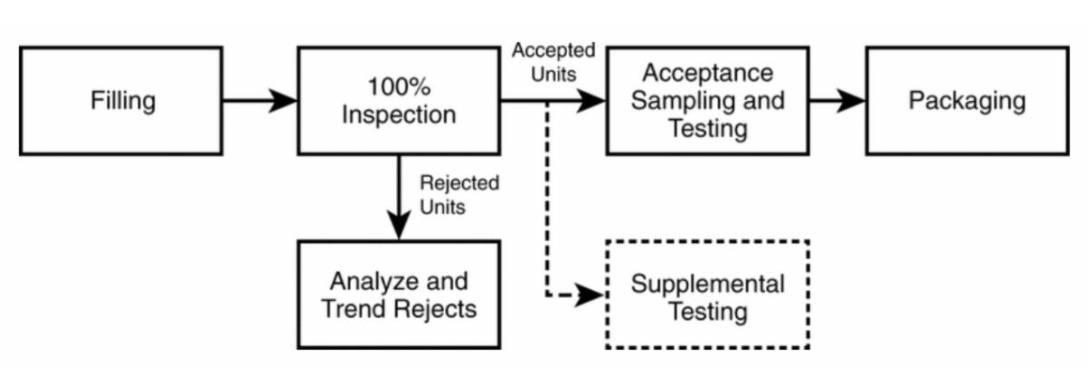
USP 797 states that 100% of the produced batch must be visually inspected. USP 1790 states that visual inspections should be performed immediately after compounding and before labeling to easily detect defects. This inspection can be performed manually or using automation. Once the 100% inspection is complete, acceptance sampling and testing should be conducted on a statistically valid sample taken from the accepted units via manual inspection. This acceptance sampling and testing should be conducted via manual inspection means only by trained personnel and under tightly controlled conditions:
- Use of contrasting backgrounds (white/black)
- Controlled light amount (2000-3750 lux)
- No magnification
- Sufficient inspection time
- Limiting inspection sessions to reduce inspector fatigue
Acceptance limits, test flow, and sampling procedures should be risk-based.
USP 1790 – Figure 1: Typical Process Flow Chart. This chart shows a simplified process flow where solid boxes indicate required process operations, and those with dotted lines (supplemental testing) may be required for difficult-to-inspect products.
For more information on establishing these parameters, please refer to USP 1790.
Visual inspection is not merely a regulatory requirement—it is critical to patient safety control. Data obtained during inspection can also help pharmacies identify process improvements, such as:
- Enhanced filtration techniques
- Improved material handling practices
- Identification of recurring contamination sources
- Refinement of aseptic technique training
Trending visual inspection failures can serve as an early warning indicator of process drift or environmental control issues.
For compounding pharmacists, visual inspection is a critical step in mitigating risk before sterile preparations reach patients. USP 790 establishes the non-negotiable expectation that injectable CSPs must be essentially free of visible particulates, while USP 1790 provides the operational framework for building reliable, consistent, and defensible inspection programs. By implementing structured inspection procedures, investing in personnel training, and incorporating ongoing performance monitoring, compounding pharmacies can significantly reduce the risk of contamination and reinforce their commitment to patient safety and CSP quality.
Resources:
- USP 1 Injections and Implanted Drug Products (Parenterals) -Product Quality Tests
- USP 790 Visible Particulates in Injections
- USP 797 Pharmaceutical Compounding – Sterile Preparations
- USP 1790 Visual Inspection of Injections
- ISO 2859-1: Sampling Procedures for Inspection
- ANSI/ASQ Z1.4: Sampling Procedures and Tables for Inspection by Attributes
- FDA Guidance for Industry – Inspections of Injectable Products for Visible Particulates